The measures that matter to investors, business owners and family offices, and what to check before 5 April 2027
The Autumn Budget 2026 left the headline rates of income tax, National Insurance, VAT and capital gains tax unchanged.
Underneath the headlines, savings interest and rental profit will be taxed at up to 49% from April 2027. Most unused pension funds come into the estate for inheritance tax on the same date. The reliefs for building and backing early-stage companies were left in place or extended.
The Chancellor called it breathing space, and for most households it is. The measures underneath point in one clear direction, and they start to bite on 6 April 2027.
The ten figures investors should know
- 24 / 44 / 49%: tax on savings interest and rental profit from 6 April 2027
- £500,000: Business Asset Disposal Relief lifetime limit from 6 April 2027, halved from £1m
- 10%: capital gains rate under the new Founders' Relief, on up to £10m of lifetime gains for qualifying founders
- 6 April 2027: most unused pension funds come into the estate for inheritance tax
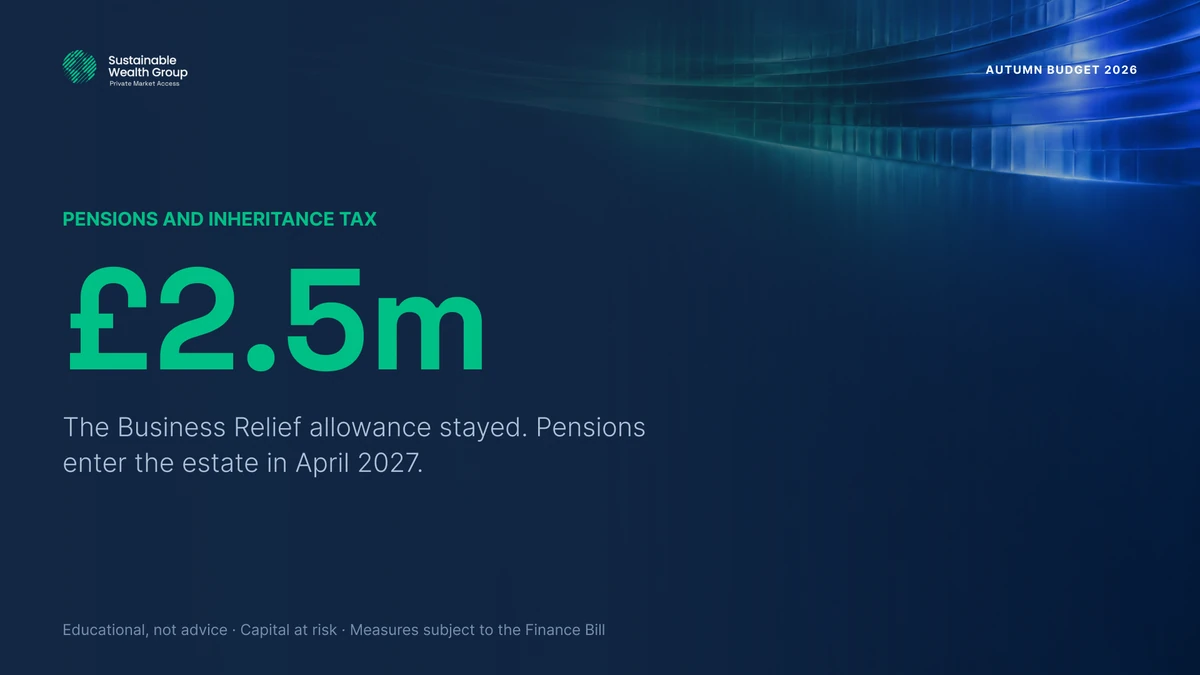
- £2.5m: individual allowance for 100% Business Relief, unchanged
- £20,000: cash ISA limit, kept for all ages after the planned £12,000 cap was scrapped
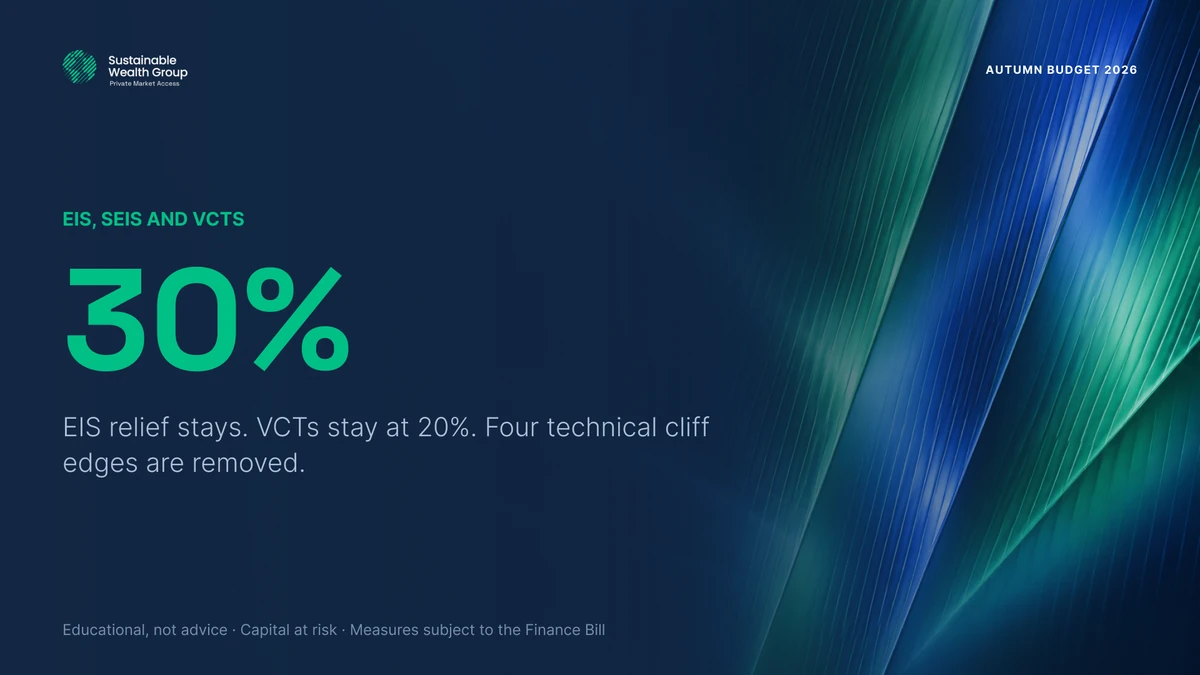
- 30% and 50%: EIS and SEIS income tax relief, unchanged
- April 2031: income tax thresholds stay frozen until this date
- £15bn: headroom against the fiscal rules in 2029/30
- £1 in £13: share of government spending that now goes on debt interest
Get the Autumn Budget 2026 investor guide
Every measure in pounds and dates, with a checklist of questions to take to your adviser before 5 April 2027.
What did not change in the Autumn Budget 2026?
Income tax rates stay at 20, 40 and 45%, and the personal allowance stays at £12,570. Capital gains tax stays at 18% and 24%. Dividend tax stays at 10.75%, 35.75% and 39.35%. Corporation tax is capped at 25% for this Parliament.
Frozen thresholds still do quiet work. Each pay rise pulls more income into a higher band, and the 60% effective rate between £100,000 and £125,140 remains.
Who pays more?
- Savers with cash outside an ISA: interest taxed at 24 / 44 / 49% from April 2027
- Landlords: rental profit taxed at the same rates from the same date
- Owners of homes worth £2m or more: a council tax surcharge of £2,500 to £7,500 a year from April 2028
- Business owners selling outside Founders' Relief: a BADR limit of half its current size
- Banks and gambling operators: higher surcharge and duty
Who gains?
- Households: a £100 energy payment and 0% VAT on electricity to July 2027
- Cash ISA savers: the £20,000 limit stays
- Small high-street businesses: the rates threshold rises from £12,000 to £18,000, taking around 70,000 premises out of rates
- Founders of innovative companies: the new 10% rate, if they qualify
- Startups and scale-ups: EMI2 options up to £120,000 per employee, and £5bn more British Business Bank capacity
What is the pattern?
Passive income from cash and property is taxed harder. Building and backing companies is rewarded.
The savings and property rises raise money from income. The Founders' Relief, EMI2, the EIS fixes and the British Business Bank capacity all point towards private capital in private companies. An investor does not have to agree with that policy to ask where their own money now sits in relation to it.
The backdrop explains why the changes are so targeted. Debt interest is £14bn a year above the March forecast and GDP growth for 2027 has been cut from 1.6% to 1.0%. With so little room for broad giveaways, the money was found in targeted places and given back in targeted places.
What should you check before 5 April 2027?
These are questions to put to your adviser or accountant. The answers depend on your own circumstances.
- Add up your taxable interest and rental profit, and multiply by four per cent. That is the extra annual cost from April 2027.
- Have you used this year's £20,000 ISA allowance?
- If you are selling a business, how does the timetable sit against 6 April 2027?
- What does your estate look like with the pension inside it from April 2027?
- Have you realised gains this year that could be deferred?
FAQ
Did the Autumn Budget 2026 raise income tax?
Not the headline rates on earnings, which stay at 20, 40 and 45%. Tax on savings interest and rental profit rises to 24, 44 and 49% from 6 April 2027, and thresholds stay frozen until April 2031.
Did capital gains tax change?
The main rates stay at 18% and 24%, with the £3,000 annual exemption. The BADR lifetime limit halves to £500,000 from 6 April 2027.
Are the measures already law?
Measures announced on 28 October 2026 are subject to a Finance Bill and may change. The inclusion of pensions in the estate from April 2027 is already law under the Finance Act 2026.
Related reading
- Savings and Rental Income Tax Rises to 24%, 44% and 49% From April 2027: What It Costs in Pounds
- Pensions Enter the Estate for Inheritance Tax in April 2027. The £2.5m Business Relief Allowance Stayed.
- Selling Your Business After April 2027: BADR Limit Halves to £500,000 and a New 10% Founders' Relief Arrives
- EIS After the Autumn Budget 2026: Relief Stays at 30%, VCTs at 20%, and Four Cliff Edges Are Removed
Get the full guide
The 15-page guide takes each measure in turn: what changed, what didn't, when it applies, what it costs in pounds, and the questions to take to your adviser. Download the free Autumn Budget 2026 investor guide.
Sustainable Wealth Group introduces qualifying investors to private companies. It does not advise investors or carry out due diligence on their behalf.
Sources: HM Treasury, Autumn Budget 2026 (28 October 2026); Office for Budget Responsibility, Economic and Fiscal Outlook (October 2026); Finance Act 2026; St. James's Place and Unbiased Budget summaries (28 October 2026).
EIS, SEIS and unquoted investments are high risk and illiquid, and may lose all of their value. This article is for information and education only. It is not financial, tax, legal or investment advice, or an offer or solicitation to invest. Measures announced on 28 October 2026 are proposals subject to enactment in a Finance Bill and may change. Tax treatment depends on individual circumstances and may change. Worked examples are illustrative. Seek independent advice before acting.
Get the Autumn Budget 2026 investor guide
Every measure in pounds and dates, with a checklist of questions to take to your adviser before 5 April 2027.