What the Autumn Budget 2026 means for business owners planning an exit, with worked examples
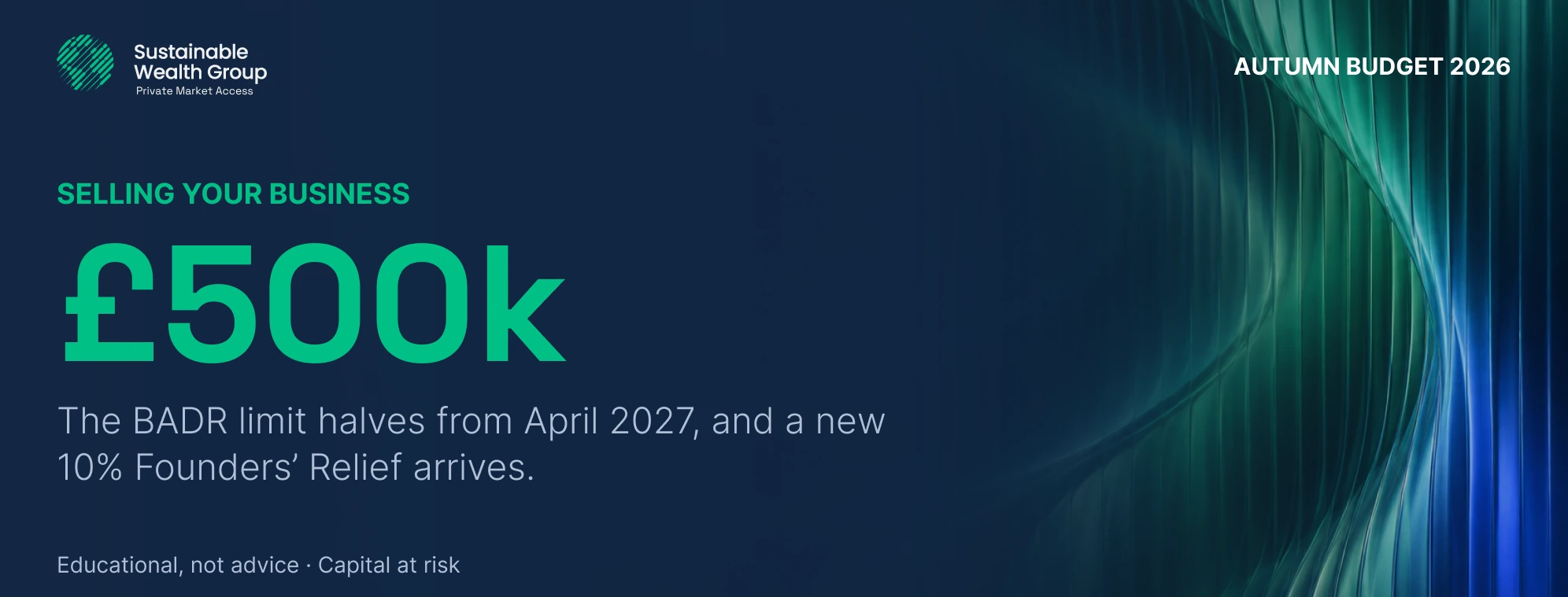
From 6 April 2027, the lifetime limit on Business Asset Disposal Relief (BADR) falls from £1m to £500,000. The Autumn Budget 2026 also created a new Founders' Relief: a 10% capital gains rate on up to £10m of lifetime gains for qualifying founders of high-growth, innovative companies.
Owners with qualifying gains above £500,000 lose relief under the first change. A smaller group could gain a great deal under the second, and who falls into that group has not been settled.
What does the BADR change cost?
BADR gives an 18% capital gains rate on qualifying gains. Gains above the limit are taxed at 24%.
Take a £1m gain outside Founders' Relief, for a higher-rate taxpayer with no other reliefs:
- Today: £180,000 of capital gains tax
- From 6 April 2027: £210,000
- Difference: £30,000 more
Get the Autumn Budget 2026 investor guide
Every measure in pounds and dates, with a checklist of questions to take to your adviser before 5 April 2027.
What could Founders' Relief be worth?
Take a £5m gain for a founder who qualifies, again a higher-rate taxpayer with no other reliefs:
- Today, using the BADR route: £1.14m
- From 6 April 2027 under Founders' Relief: £500,000
- Difference: £640,000 less
Treat that number with care. Eligibility is expected to be tight and is out for consultation. Involve your accountant now, and do not bank the saving yet.
What else is in the package for scale-ups?
- EMI2 share options: the limit doubles from £60,000 to £120,000 per employee, for companies too large for EMI. EMI2 replaces CSOP.
- British Business Bank: £5bn more capacity, including £1.4bn for equity funds and £450m of venture debt
- National Wealth Fund: up to £5bn into defence tech
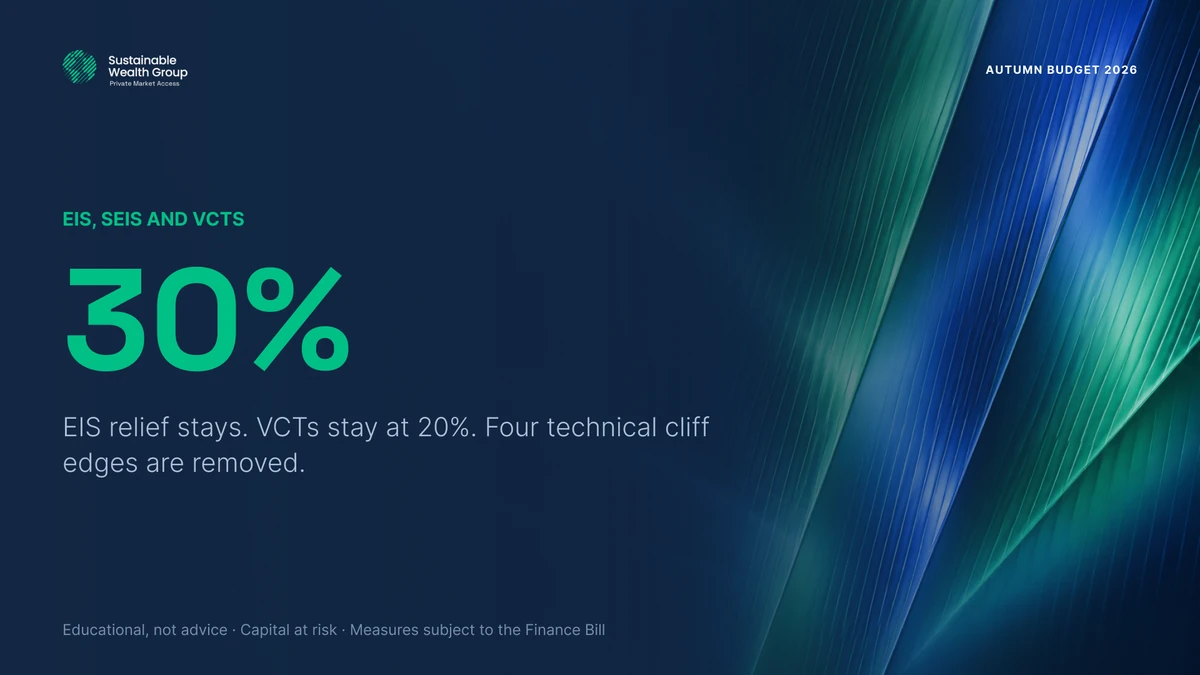
- Corporation tax: capped at 25% for this Parliament
- Business rates: small business threshold up from £12,000 to £18,000 from April 2027
- Non-competes: to be banned
- R&D claims: the notification form is scrapped
- Trading Allowance: triples from £1,000 to £3,000 from April 2027
Read together, these measures mean public money will be backing the same early-stage rounds that private investors are invited into.
What should you ask your accountant?
- How does my sale timetable sit against 6 April 2027?
- How much of my BADR lifetime limit have I already used?
- Could my company qualify as a founder business, and what does the consultation say so far?
- Is a share option scheme better under EMI or EMI2 at my size?
- If I realise a gain, what are my options for it, and what are the risks of each?
FAQ
What is the BADR limit from April 2027?
£500,000 of lifetime qualifying gains, down from £1m. Gains within the limit are taxed at 18%, and gains above it at 24%.
Who qualifies for Founders' Relief?
It is aimed at qualifying founders of high-growth, innovative companies. The detail is out for consultation and eligibility is expected to be tight.
Have the main capital gains tax rates changed?
No. They stay at 18% and 24%, with the £3,000 annual exemption.
Does the Budget change corporation tax?
The rate is capped at 25% for the rest of this Parliament.
Related reading
- Autumn Budget 2026 for Investors: Cash and Property Income Taxed Harder, Building Companies Rewarded
Get the full guide
The guide has a full section for business owners and founders, along with the checklist to work through before 5 April 2027. Download the free Autumn Budget 2026 investor guide.
Sustainable Wealth Group introduces qualifying investors to private companies. It does not advise investors or carry out due diligence on their behalf.
Sources: HM Treasury, Autumn Budget 2026 (28 October 2026); Startup Coalition, The Budget 2026; St. James's Place and PwC summaries (28 October 2026).
This article is for information and education only. It is not financial, tax, legal or investment advice, or an offer or solicitation to invest. Measures announced on 28 October 2026 are proposals subject to enactment in a Finance Bill and may change. Tax treatment depends on individual circumstances and may change. Worked examples are illustrative. Seek independent advice before acting.
Get the Autumn Budget 2026 investor guide
Every measure in pounds and dates, with a checklist of questions to take to your adviser before 5 April 2027.