The Autumn Budget 2026 measure that barely made the speech, with worked examples for each tax band
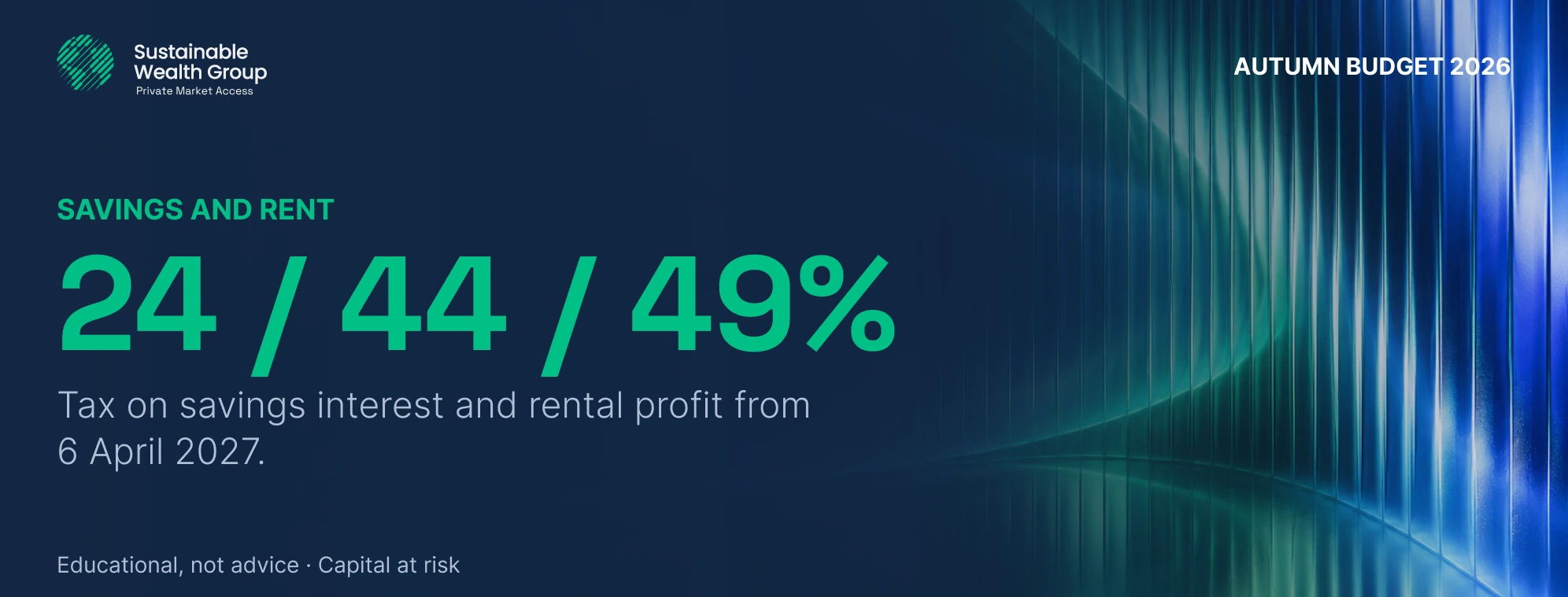
From 6 April 2027, savings interest and rental profit will be taxed at 24%, 44% and 49%. That is four points above the 20%, 40% and 45% paid on a salary.
Last year's Budget added two points. This one added two more. The change barely made the speech, and it is the one many investors will feel most directly.
How much will it cost?
The sum is simple. Add up your taxable interest and rental profit for the year and multiply by four per cent. That is the extra annual cost from April 2027.
On £10,000 of taxable interest or rent:
- Basic-rate taxpayer: £2,000 today, £2,400 from April 2027
- Higher-rate taxpayer: £4,000 today, £4,400 from April 2027
- Additional-rate taxpayer: £4,500 today, £4,900 from April 2027
The extra £400 scales with the income. On £50,000 of taxable interest and rent, the extra cost is £2,000 a year. An additional-rate taxpayer will hand almost half of every pound to HMRC.
Get the Autumn Budget 2026 investor guide
Every measure in pounds and dates, with a checklist of questions to take to your adviser before 5 April 2027.
What does not change?
- Personal savings allowance: £1,000 for basic-rate taxpayers, £500 for higher-rate and £0 for additional-rate
- ISAs: interest, dividends and gains inside an ISA stay tax-free
- Cash ISA limit: £20,000 for all ages, after the planned £12,000 cap was scrapped
- Dividend tax: 10.75%, 35.75% and 39.35%, where it moved in April 2026
- Capital gains tax: 18% and 24%, with the £3,000 annual exemption
Why does the gap between income and gains matter?
Income from cash and property has gone up. Gains on assets have not. For an additional-rate taxpayer, the top rate on interest or rent will be 49% and the rate on a gain will be 24%, a gap of 25 points.
The same comparison applies inside and outside an ISA. From April 2027 the top rate on interest is 49% in a general account and 0% in an ISA. Cash sitting in a general account has become a worse place to park money.
What else affects landlords?
Rental profit is not the only property measure in the Budget.
- Homes worth £2m or more: a council tax surcharge of £2,500 to £7,500 a year from April 2028, with a deferral scheme and exemptions
- Properties empty for 12 months or more: a 100% council tax premium
- Self-assessment: payments are accelerated from 2029, so cash flow needs planning early
Income tax thresholds also stay frozen until April 2031. As rents or interest rise, more of that income can fall into a higher band.
What should you ask your adviser or accountant?
- What is my taxable interest and rental profit, and what will four per cent of it cost me each year?
- Have I used this year's ISA allowance? It is £20,000 per person, or £40,000 per couple, plus the Junior ISA for children.
- Does my spouse's tax band change how our savings should be held?
- How does the return on my property look after the new rate, and after the 2029 change to self-assessment payments?
FAQ
When does the new tax on savings and rental income start?
6 April 2027. The rates of 24%, 44% and 49% apply to savings interest and rental profit in England, Wales and Northern Ireland.
Does it apply to dividends?
No. Dividend tax stays at 10.75%, 35.75% and 39.35%. Those rates moved in April 2026.
Is interest inside a cash ISA affected?
No. Interest inside an ISA stays tax-free, and the £20,000 cash ISA limit stays for all ages.
Has the personal savings allowance changed?
No. It stays at £1,000 for basic-rate, £500 for higher-rate and £0 for additional-rate taxpayers.
Related reading
- Autumn Budget 2026 for Investors: Cash and Property Income Taxed Harder, Building Companies Rewarded
Get the full guide
The guide sets out every income measure in pounds, then goes through ISAs, pensions, business owners and inheritance tax. Download the free Autumn Budget 2026 investor guide.
Sustainable Wealth Group introduces qualifying investors to private companies. It does not advise investors or carry out due diligence on their behalf.
Sources: HM Treasury, Autumn Budget 2026 (28 October 2026); Bishop Fleming and Unbiased Budget summaries (28 October 2026).
This article is for information and education only. It is not financial, tax, legal or investment advice, or an offer or solicitation to invest. Measures announced on 28 October 2026 are proposals subject to enactment in a Finance Bill and may change. Tax treatment depends on individual circumstances and may change. Worked examples are illustrative. Seek independent advice before acting.
Get the Autumn Budget 2026 investor guide
Every measure in pounds and dates, with a checklist of questions to take to your adviser before 5 April 2027.